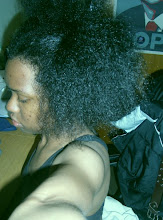
My laptop only works if it's plugged up. My adapter broke right before my week-long stay in Tanzania. :-[
When I got back from Tanzania three Saturdays ago, my prof said he could find me a new one cheap, but I’d have to wait awhile for it. I was being shipped off for 3 weeks to a new host family. The computers I’d have access to were slow and didn’t have all my files. I did not have awhile. So I went combing Nairobi for a new cord. I found one for KSH2500 /=, or $35.00. Real value? $15.00 (KSH1125 /=) on Amazon (shipping and handling included). The special price the shopkeeper was offering only to me? KSH 1700 /=. Psh.
I left annoyed because I was paying extra for all the usual reasons: not being a good haggler, being American, the shopkeeper knowing I really wanted/needed [insert item here], etc., etc. But the transaction has me thinking about the real value of money.
Money is damn impersonal. Under the barter system, people pay each other thoughtfully: If I was shopping for a laptop cord in pre-colonial Kenya, I’d’ve paid in maize, mangoes, or whatever else I knew the shopkeeper needed for dinner that evening. But since I’m living in cash economy Kenya, I hand over bills I lie about not having because I couldn’t care less what they mean to the person I’m paying.
No wonder I wasn’t too annoyed about being overcharged: It’s not like I thought, “Hm. The shopkeeper might really need some extra food for dinner tonight,” picked some corn and beans, and went to her shop. If I’d done all that, I’d’ve insisted that she take what I had to give her because I considered what she needed and worked to get it for her. Instead, I walked to an ATM, punched in the amount I wanted, and went to the store thinking of a lie to get the price I thought I should pay.
And no wonder the shopkeeper didn’t mind exploiting me: I was anxious to get access to my computer. She knew I didn’t care if KSH 1700 =/ was or was not enough to feed her and/or her family. So why should she give a flip if I’m a “poor” college student?
Of course, money isn’t completely useless: Had I showed up with a basketful of corn or offered to buy her lunch, she probably would’ve laughed in my face. I didn’t know this woman. How would I have known that she needed food? Maybe she needed a new shirt, or some pens, or anything really. The barter system, then, only works if there’s a relationship between the two people. That being the case, money is a way of saying, “Hey. I really don’t know what you need. I’m sorry.”
It makes me sad that money doesn’t reflect the true value of anything. How can 4x2 bits of paper be equivalent to pictures to share with my host family; Lupe, R.E.M., and Visions to keep my mind right after 15+ hour day; a way to finally update ya’ll on my life? How can these bills be a sincere “Thank you” for access to those things when I’ve put no thought into how they’ll be used? How can you quantify appreciation and care?
Monday, March 15, 2010

Monday, March 8, 2010
20 Fun Facts about Kenya!
- There’s so much cabbage. So. Much.
- Nigga isn’t bleeped out on the radio.
- It’s okay to eat hot dogs for breakfast.
- Some Nairobians hate being spoken to in Swahili b/c they either a) don’t know Swahili or b) want you to speak English to them b/c that’s more “first world.”
- Everyone wears fall/winter-appropriate attire. It’s at least 80 degrees outside everyday.
- I’ve never seen so many Black hair care products. Unfortunately, most of them aren’t good for your hair…
- Know how it’s illegal to drive on the shoulder or the wrong side of the road in the States? Yeah. That rule doesn’t exist here.
- Heat like Texas, scenery like Florida.
- “‘[insert random Africa-centric news show]’ coming up at 8:00PM Africa Time” ~CNBC’s African network.
- Imagine listening to a Boys II Men-young Usher-Aaliyah mix while you shop for vegetables. …How do you feel?… That’s what it feels like to go shopping at Nakumatt (Kenya’s version of Walmart)
- Shanty-type = Ratchet
- Advice columns in the newspaper are on point. They be treatin folks!
- In Kibera, there’s a beautiful anti-violence mural painted by the children there.
- The “Birthday Sex” beat is the background for some random commercial…
- Kenchic is the Kenyan equivalent to McDonald’s
- Thank God, there’s no McDonald’s
- No fro-hawks. YAAAAAAAAAAY!!!!
- Kenyan accents are British
- Ninakuona = I see you!
- Ever wondered what happened to FUBU? I don't anymore...
Thursday, March 4, 2010
Some things you just don't compare (or the last lesson i can put in words)
I’m sitting on a rock that’s been eroded by water, wind, bare feet, and the sun. Google Earth knows this place only by pixels. I’m physically here, being serenaded with an instrument that can’t be massed produced. There’s no wind tonight, so no one can hear this song and our singing and our dancing feet except us.
...my God, my God, my God…
-Wanda’s written journal, Wednesday, February 17th 2010

A view of the valley from the rock I was sitting on

One of the many hills we climbed to get to that rock

The Hadza and me acting silly before our random dance party

The fiddler on the rock =)
...my God, my God, my God…
-Wanda’s written journal, Wednesday, February 17th 2010

A view of the valley from the rock I was sitting on

One of the many hills we climbed to get to that rock

The Hadza and me acting silly before our random dance party

The fiddler on the rock =)
Wednesday, March 3, 2010
Lessons Learned from the Hadza - Privilege
None of the Hadza knew who Lil Wayne was. They didn’t ask us if we lived in the OC. They never wondered if we ate the kind of food they ate. They weren’t offended that we weren’t going to add them on Facebook because a) they don’t have Facebook and b) they wouldn’t want it if someone tried to sign them up for an account. In general, the Hadzabe didn’t give two damns about America.
Because of that, they didn’t seriously/jokingly ask us to take their children with us, or propose to us, or shake their heads at us because we weren’t up on the latest Hadzabe/Tanzanian/East African news.
And we loved it.
We loved not being idealized and envied. We loved not being judged for our ignorance of the wider world. We loved not being conflated with the power of our government. We loved not being held responsible for all the world’s ills.
Before staying with the Hadzabe, we had been living with and amongst people that were not shy about reminding us that we, as Americans, were very privileged people. Even though those reminders were “Mzungu!” and (skeptically) “You don’t have money?,” they were enough to make sure we remembered our place in this world.
When we stayed with the Hadzabe, we reveled in our break from social responsibility. In allowing our privilege to be swept under a rug, we stopped thinking about how we could correct the wrongs that our government, economic system, etc. commits against others around the world. We voluntarily forgot that our inability to act doesn’t excuse the oppression of others.
The Hadzabe allowed us to forget because they didn’t care about our responsibility to them and the rest of the world. They didn’t care because they didn’t see themselves (only) as victims of our privilege. In not focusing on how the “modern” world has disenfranchised them, the Hadzabe asserted their own sense of privilege/power, and thus, were not fazed by our status as citizens of an elite country. As noted in the last post, they have a power all their own. (Even still, that does not mean the privileged have no responsibility to them…)
After living with the Hadzabe, I’ve concluded that privilege is a state of mind that is actualized or suppressed depending on how we are able/allowed to use our immediate environment. If this is so, then privilege is the ability and permission to exercise the imagination: Outsiders see Mongo wa Mono and see a barren landscape that they need to be saved from. A Hadza sees it and can dig up a tuber big enough to feed her family. She has power. She has privilege. A Hadza might look at my laptop and see a useless piece of something that has no word in Hadzane. Among a host of other things, I see a way to raise awareness about their lives.
When we returned to Nairobi, we were greeted with the usual, “Mzungu, mzungu!” and general discomfort with our inability/apathy to act on the privilege we were being told we have. Thinking about how we were with the Hadzabe, how we are in Kenya, and how (relatively) less-privileged people treat us. I ask myself,
Where has our imagination gone and who’s holding it captive?
Because of that, they didn’t seriously/jokingly ask us to take their children with us, or propose to us, or shake their heads at us because we weren’t up on the latest Hadzabe/Tanzanian/East African news.
And we loved it.
We loved not being idealized and envied. We loved not being judged for our ignorance of the wider world. We loved not being conflated with the power of our government. We loved not being held responsible for all the world’s ills.
Before staying with the Hadzabe, we had been living with and amongst people that were not shy about reminding us that we, as Americans, were very privileged people. Even though those reminders were “Mzungu!” and (skeptically) “You don’t have money?,” they were enough to make sure we remembered our place in this world.
When we stayed with the Hadzabe, we reveled in our break from social responsibility. In allowing our privilege to be swept under a rug, we stopped thinking about how we could correct the wrongs that our government, economic system, etc. commits against others around the world. We voluntarily forgot that our inability to act doesn’t excuse the oppression of others.
The Hadzabe allowed us to forget because they didn’t care about our responsibility to them and the rest of the world. They didn’t care because they didn’t see themselves (only) as victims of our privilege. In not focusing on how the “modern” world has disenfranchised them, the Hadzabe asserted their own sense of privilege/power, and thus, were not fazed by our status as citizens of an elite country. As noted in the last post, they have a power all their own. (Even still, that does not mean the privileged have no responsibility to them…)
After living with the Hadzabe, I’ve concluded that privilege is a state of mind that is actualized or suppressed depending on how we are able/allowed to use our immediate environment. If this is so, then privilege is the ability and permission to exercise the imagination: Outsiders see Mongo wa Mono and see a barren landscape that they need to be saved from. A Hadza sees it and can dig up a tuber big enough to feed her family. She has power. She has privilege. A Hadza might look at my laptop and see a useless piece of something that has no word in Hadzane. Among a host of other things, I see a way to raise awareness about their lives.
When we returned to Nairobi, we were greeted with the usual, “Mzungu, mzungu!” and general discomfort with our inability/apathy to act on the privilege we were being told we have. Thinking about how we were with the Hadzabe, how we are in Kenya, and how (relatively) less-privileged people treat us. I ask myself,
Where has our imagination gone and who’s holding it captive?
Tuesday, March 2, 2010
I feel like you should know something about the folks who taught me so much...

The Hadza hunt, forage, and migrate across Mongo wa Mono, the Yaeda Valley, and Eyasi regions of Tanzania. Since their focus is providing for their most essential physical and emotional needs, time is dedicated to hunting, finding the most plentiful vegetation, building new (temporary) villages, and learning the songs and dances that fill the time in between. There’s little room for war (intra- or extra-tribal), political leadership, or anything else that could get in the way of them staying alive, healthy, and happy. The constant moving, the amount of time it takes to get a few tubers for a day’s meal, the difficulty of catching and preparing a decent kill to feed the family, and the need to take a break from work all amount to a lifestyle that doesn’t allow them to give much thought to the future. Saving is unheard of. What’s available is only available for the now. If what they do nourishes them in the present moment, then their satisfied.
The Hadza’s lifestyle is admirable but can’t be emulated in our capitalist, “developed” world. We only know how to exploit the Hadza’s principles to serve our own interests. Case-in-point, the Tanzanian government’s efforts to gain economically from displacing the Hadza under the guise of “development” are directly benefited by the Hadza’s non-confrontational lifestyle: Under Land Act No. 4 and Village Land Act No. 5, the Tanzanian government is sanctioning pastoralists’ and farmers’ occupation of Hadza land. They reason that if the Hadza see others modeling a more “respectable” lifestyle, then they’ll become “civilized”. While the Tanzanian government’s disgust with the Hadza is (unfortunately) sincere drives their efforts to convert them, their more lucrative motivation is pressure from other governments to buy Hadza land. Such systematic, government-sanctioned ethnocide has dwindled the Hadza population from 5000 to 1800 in the past 3 decades.
The Hadza have no interest in farming or herding and are disgusted by game hunting, but won’t fight – physically or legally – their invaders because that’s just not how they operate. Instead, they move to parts of their land that haven’t been taken over by outsiders and rely on advocates like Dorobo Tours Ltd to represent them in government. Though they’ve survived thus far, their land and population shrinks every year.
To be honest, I wasn’t too shook when I read about the injustices levied against the Hadza; displaced and disenfranchised peoples are in East African news all the time. It wasn’t until we went hunting with them that their situation really hit me: One of the hunters spotted an impala. He was going to shoot it, but two pastoralists – one on either side of the impala – came herding their cattle. The impala ran off at the sound of 20+ stamping hooves. The worse part though was that these cattle were being herded through already-depleted land to a field that hadn’t been ate up yet. What hope is there for the Hadza when people legally scare off their lunch? How can they reasonably compete for food with animals that eat more for lunch than they can eat in a week?
But they don’t think in terms of weeks. When they see cattle grazing on their land, they see a field that just happens to be occupied at the time they want to use it and move on. This ability to live completely in the moment is their weakness and strength: If they don’t think of the future, they don’t think of their lifestyle being a memory in a few decades. If they don’t think of the future, then why would they create a plan to save their future selves?
But by living for today, they live completely fulfilling lives despite their disenfranchisement. If you told me that the Hadzabe weren’t proactive about fighting the injustices levied against them before I had lived with them, I would have thought that they felt too powerless to act. That is not the case at all. They don’t feel a need to act in harmony with the “modern” world. While that means they don’t represent themselves in the Tanzanian government*, it also means they understand that what they need can't be found in a dusty Parliament or court of law. What they need is in them, with them, and surrounding them. From this perspective the question becomes: Is there more power in gaining the upperhand over your enemy or in being able to fully sustain the self every day? I think the Hadza believe the latter.
*Hadza who have left the hunting/gathering lifestyle and advocates in Tanzania and elsewhere lobby on the Hadzabe’s behalf.
Monday, March 1, 2010
Lessons Learned from the Hadza - Identity Shmidentity
February 13th – 19th we had the privilege of talking, working, and living with the Hadzabe tribe of Tanzania. The Hadzabe are one of the last groups of hunter-gatherers in the world (?). The Tanzanian government is hoping to convert them into farmers. If they succeed, the Hadzabe’s traditional way of life will be extinct. I’ll give more details on the Hadzabe in a later post, but until then, lessons learned…
Lesson 1 – Identity shmidentity
On our first day with the Hadzabe, we had small group discussions with them. When we introduced ourselves, I got the curious stares and pleasant smiles that always come with being the black mzungu. Other than their initial reaction though, my Blackness didn’t matter. I was just another student, mzungu, American, and/or tourist to them. What mattered about my identity was not how I saw myself, but how they saw me.
Of course, that realization didn’t come until after I spent a good chunk of time reflecting on the tenuousness of identity. While I'm glad I have some fresh insight on identity/the self, I was definitely reflecting while I should have been asking the Hadza questions because of that whole you’ll-never-have-this-moment-again thing. ::sigh::
However, what I did glean from my ill-use of time is that insisting on being seen as Black first and American second homogenizes the experiences of all Black people: Kenyans describe themselves as Black, but their Blackness is shaped by experiences different from that of Black Americans (and other folks who define themselves as Black). If I make a point of calling myself Black here as a way to integrate myself into communities, social circles, etc., I tacitly assume that all Black experiences are the same and attempt to forge a solidarity between myself and all Black people that doesn't necessarily exist. Blackness, then, is a very local identity. As such, it can only be conferred or denied by the Black people in the area. Of course, this is an uncomfortable and debatable conclusion, but I find it to be a valuable one because it suggests that you can’t ever fully know yourself: If Blackness (or any other identity) must be conferred by another, then the self must be partially defined by someone that isn’t you.
If the self must be (in part) outwardly defined, then I lost a valuable opportunity to know myself better by pondering this “Am I Black still???” issue instead of asking the Hadzabe good questions about their lives and, what, exactly, makes them Black (if they do indeed define themselves as Black). Luckily, I resolved my mini-identity crisis the first day, so I didn't completely squander the week. When I really began engaging with the Hadzabe, maaan.... More later though...
Lesson 1 – Identity shmidentity
On our first day with the Hadzabe, we had small group discussions with them. When we introduced ourselves, I got the curious stares and pleasant smiles that always come with being the black mzungu. Other than their initial reaction though, my Blackness didn’t matter. I was just another student, mzungu, American, and/or tourist to them. What mattered about my identity was not how I saw myself, but how they saw me.
Of course, that realization didn’t come until after I spent a good chunk of time reflecting on the tenuousness of identity. While I'm glad I have some fresh insight on identity/the self, I was definitely reflecting while I should have been asking the Hadza questions because of that whole you’ll-never-have-this-moment-again thing. ::sigh::
However, what I did glean from my ill-use of time is that insisting on being seen as Black first and American second homogenizes the experiences of all Black people: Kenyans describe themselves as Black, but their Blackness is shaped by experiences different from that of Black Americans (and other folks who define themselves as Black). If I make a point of calling myself Black here as a way to integrate myself into communities, social circles, etc., I tacitly assume that all Black experiences are the same and attempt to forge a solidarity between myself and all Black people that doesn't necessarily exist. Blackness, then, is a very local identity. As such, it can only be conferred or denied by the Black people in the area. Of course, this is an uncomfortable and debatable conclusion, but I find it to be a valuable one because it suggests that you can’t ever fully know yourself: If Blackness (or any other identity) must be conferred by another, then the self must be partially defined by someone that isn’t you.
If the self must be (in part) outwardly defined, then I lost a valuable opportunity to know myself better by pondering this “Am I Black still???” issue instead of asking the Hadzabe good questions about their lives and, what, exactly, makes them Black (if they do indeed define themselves as Black). Luckily, I resolved my mini-identity crisis the first day, so I didn't completely squander the week. When I really began engaging with the Hadzabe, maaan.... More later though...
Subscribe to:
Comments (Atom)